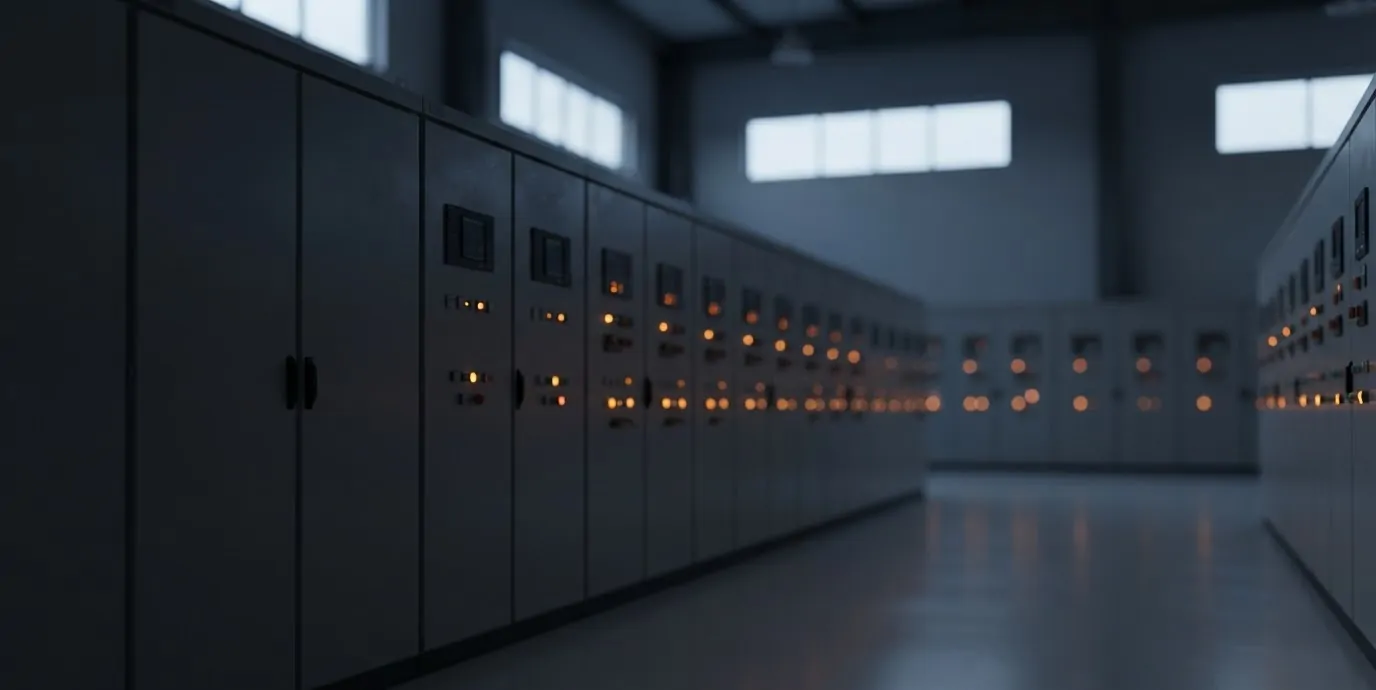

Ahmedabad and its industrial belts — Naroda, Vatva, Odhav, Changodar, Sanand and Kathwada — have dozens of panel builders. Prices on quotations can differ by 30–40% for what looks like the same panel. The difference is almost always in things a quotation does not show: component quality, busbar sizing, wiring practice, testing and support after commissioning.
This checklist will help you compare manufacturers on what actually matters.
1. Standards and Design Capability
Ask which standard the panel is designed and verified to. For low-voltage assemblies this should be IEC 61439 (IS/IEC 61439). A capable manufacturer will discuss:
- Short-circuit withstand rating of the busbar system (for example 50 kA for 1 second).
- Temperature-rise considerations, especially for VFD and APFC panels.
- Form of internal separation.
- IP rating for the installation environment.
If a supplier cannot explain these, they are building to habit, not to design.
2. Component Makes
Your specification should name acceptable makes for breakers, contactors, relays, drives, PLCs and meters — for example Schneider, Siemens, ABB, L&T, Mitsubishi or Delta. Ask for the make and model of every major component in the quotation. Low quotes sometimes substitute unbranded or refurbished components.
3. Sheet Metal and Finish
- CRCA sheet thickness — commonly 2 mm for load-bearing frames and gland plates, and 1.6 mm for doors and covers; thinner sheet bends and rattles.
- Pre-treatment and powder coating — a proper seven-tank pre-treatment before powder coating resists corrosion; check the coating thickness.
- Door gaskets, hinges and locks — these decide whether the panel actually achieves its IP rating years later.
4. Busbars and Power Wiring
- Busbar material (copper or aluminium) and current density used for sizing.
- Busbar supports rated for the fault level.
- Heat-shrink sleeving and colour coding.
- Correctly crimped lugs with the right tool — a poor crimp is a future hot spot.
5. Control Wiring Quality
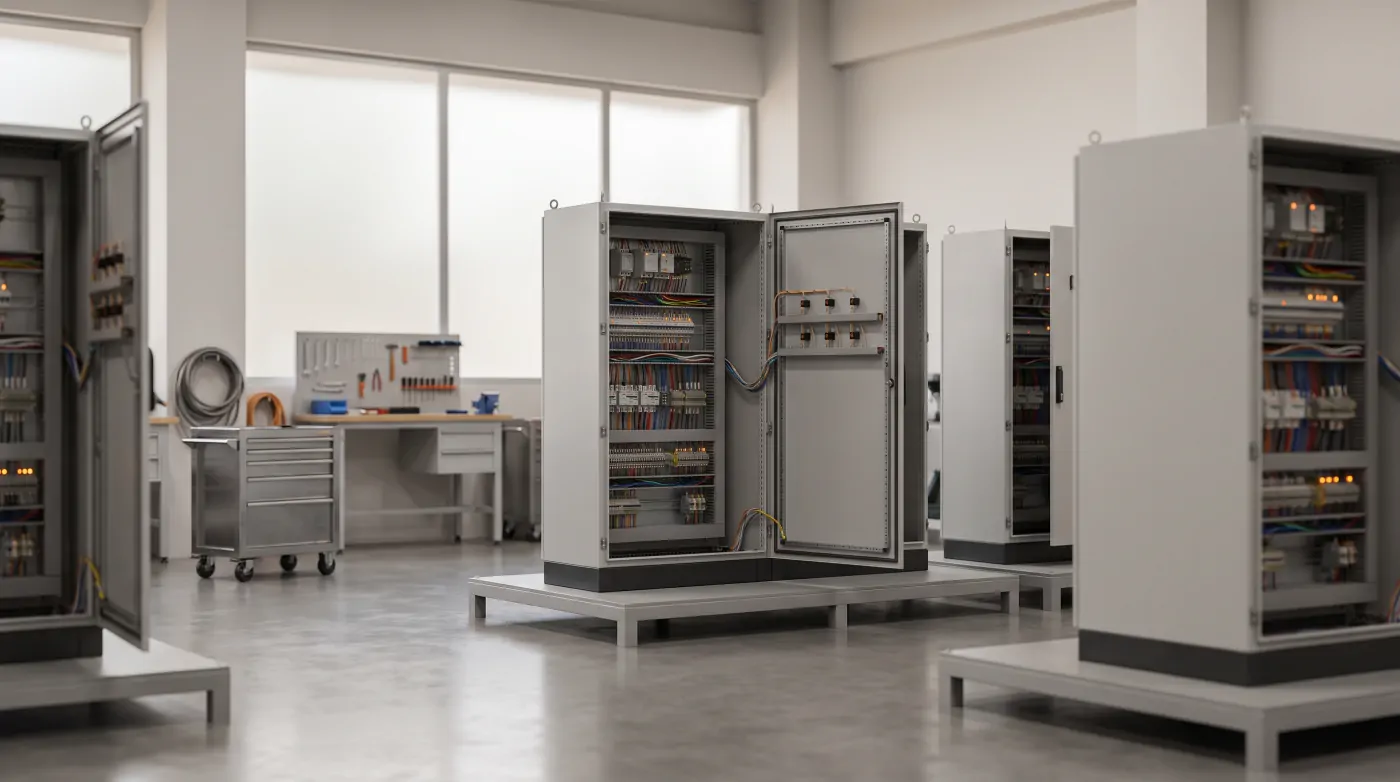
Open the door of a panel the manufacturer has already built. Good wiring has:
- Ferrules on every wire end, matching the wiring diagram.
- Wires routed in ducts, not loose bundles, with spare duct space.
- Separate routes for power, control and communication cables.
- Terminal blocks labelled, with spare terminals.
- No more than two wires per terminal.
6. Testing Before Dispatch
A reliable manufacturer performs and documents:
- Insulation resistance and high-voltage (dielectric) tests.
- Continuity and wiring checks against drawings.
- Functional testing of every starter, interlock and control circuit.
- For PLC panels, I/O checks and a simulation of the program.
- A Factory Acceptance Test (FAT) that you or your consultant can attend.
7. Documentation
You should receive, as a minimum: general arrangement (GA) drawings, single-line diagram, wiring/schematic diagrams, bill of materials, test reports and, for PLC panels, the program backup. Without documentation, every future fault takes longer to find.
8. Installation, Commissioning and Support
A panel is only finished when it runs your plant. Prefer manufacturers who also handle on-site installation, cable termination, commissioning and operator training — and who will answer the phone when there is a trip at 2 a.m. Ask how quickly they can reach your site and whether they keep spares.
9. Experience in Your Industry
Textile, rolling mill, paper, pharma and chemical plants each have their own demands — dust, heat, washdown, hazardous areas or high drive loads. A manufacturer who has worked in your industry will anticipate problems a general builder will miss.
Questions to Ask Every Supplier
- Which standard is the design verified to, and what is the busbar short-circuit rating?
- What are the exact makes and models of the major components?
- What sheet thickness and coating process do you use?
- Can I see a panel you have recently built?
- What tests do you perform, and can I attend the FAT?
- What documents will I receive?
- Who commissions the panel, and what support do you provide afterwards?
About Kamakshi
Kamakshi Electrical & Enterprise is an Udyam-registered manufacturer in Nava Naroda, Ahmedabad. We design, build and test PCC, MCC, IMCC, APFC, AMF and PLC panels, and our own engineers handle installation and commissioning, PLC programming and after-sales support. Contact us with your specification or single-line diagram.
Further Reading
Related Articles
Explore more technical guides from our automation knowledge base.