

Why Power Factor Still Deserves Attention
Many plants focus on production output and equipment uptime but overlook electrical efficiency at the utility interface. Poor power factor can increase penalties, loading, and avoidable cost.
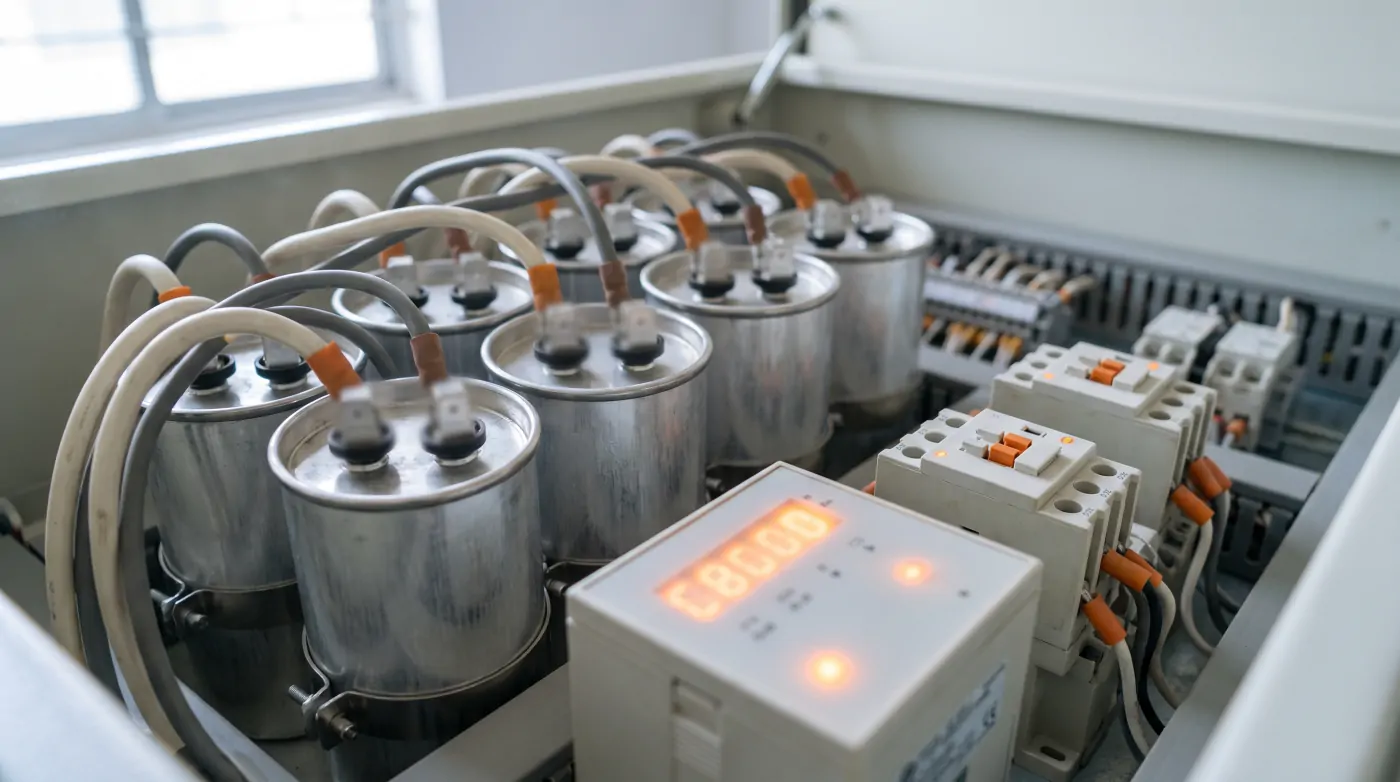
An APFC panel, or Automatic Power Factor Correction panel, helps maintain the plant power factor by switching capacitor banks based on demand.
What an APFC Panel Does
The panel continuously monitors electrical load and adds or removes capacitor steps to improve power factor.
That improves:
- Utility billing performance
- Transformer loading
- System efficiency
- Voltage profile stability
- Overall electrical housekeeping
Signs a Plant May Need APFC Attention
- Regular power factor penalties
- Heavy inductive motor loads
- Frequent large motor starting
- High transformer utilization
- Poor energy performance despite stable production
Plants running many pumps, blowers, compressors, and process drives often benefit from reviewing both APFC strategy and VFD Energy Saving in Industrial Plants, because power factor and speed control affect cost in different ways.
Key Design Considerations
Load Profile
Power factor correction should match real plant behavior. If the load changes through shifts or batch cycles, capacitor steps must respond appropriately.
Harmonics
Plants with many drives or nonlinear loads should evaluate harmonic conditions before finalizing capacitor bank configuration.
Protection and Switching
Proper switching devices, controller settings, and protection coordination are essential for reliable operation.
Maintenance Access
The panel should allow easy capacitor inspection, ventilation checks, and controller service.
Business Benefits
Lower Utility Charges
This is often the first driver for APFC projects.
Better Use of Electrical Infrastructure
Improved power factor can reduce apparent power demand and support healthier loading on transformers and feeders.
Cleaner Energy Management
APFC performance becomes more useful when it is monitored through dashboards and electrical trends. Plants with reporting needs may combine this with SCADA System Guide for Modern Industrial Monitoring.
Final Takeaway
APFC panels are not only about avoiding penalties. They are part of a broader electrical efficiency strategy that can improve system behavior, reduce waste, and support a more stable industrial supply network.
Related Articles
Explore more technical guides from our automation knowledge base.