
Fuel is often the single largest running cost in a steel rolling mill, and the reheating furnace is where most of it is burnt. Yet many furnaces still run their burners with a fixed air-fuel ratio set years ago — usually with far more air than combustion needs. Measuring the oxygen left in the flue gas, and trimming the air accordingly, is one of the simplest and fastest-paying energy measures available.
Why Excess Air Matters
Every fuel needs a certain amount of air for complete combustion. Burners are run with some excess air to make sure all the fuel burns. But every extra kilogram of air that enters the furnace must be heated from ambient temperature to flue-gas temperature and then carried up the chimney — taking fuel energy with it.
- Too much air wastes fuel heating air that does no useful work, and increases scale formation on billets (more oxygen at the steel surface means more metal lost as scale).
- Too little air leads to incomplete combustion — carbon monoxide, soot, unburnt fuel and wasted energy, and potentially unsafe conditions.
The goal is to run as close as practical to the ideal ratio, with just enough excess air for complete, safe combustion. Measuring residual oxygen in the flue gas tells you exactly where you are. A commonly used rule of thumb is that each 1% reduction in flue-gas oxygen (achieved by cutting excess air) improves efficiency by roughly half a percent to one percent, depending on flue-gas temperature and fuel; the hotter the flue gas, the bigger the gain.
How a Zirconia Oxygen Analyser Works
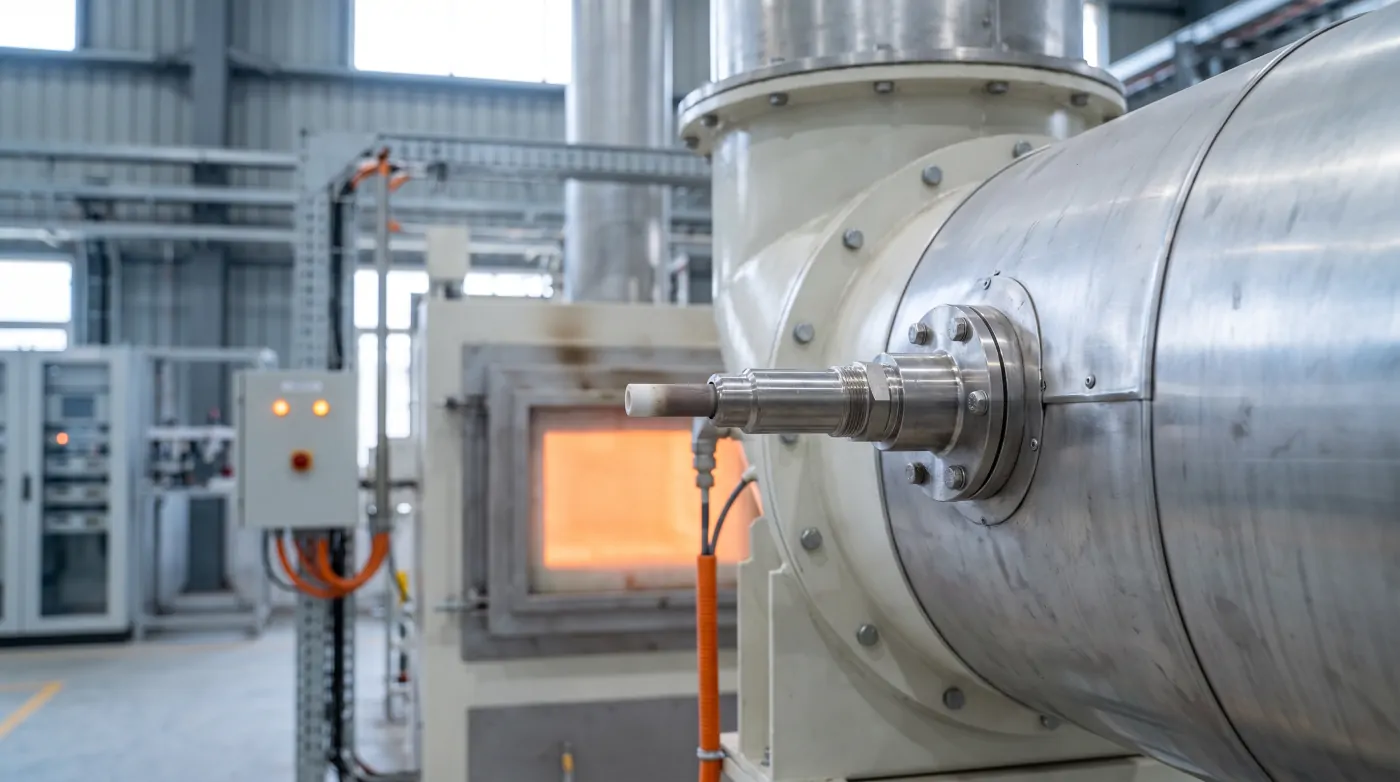
Most in-situ furnace analysers use a zirconium oxide (zirconia) sensor. Heated to several hundred degrees Celsius, zirconia conducts oxygen ions. With flue gas on one side and a reference gas (usually ambient air) on the other, the sensor produces a voltage that depends on the difference in oxygen concentration. This gives a fast, continuous reading of percent oxygen without needing a sample to be extracted and conditioned.
A typical system has:
- A probe mounted through the flue duct or furnace wall.
- An electronics unit that converts the sensor signal to percent O2 and outputs a 4–20 mA signal or fieldbus value.
- A calibration gas connection for periodic checks.
Installation Location
Where you measure is as important as what you measure:
- Install the probe where the gas is well mixed and representative of all burners — usually in the flue duct after the furnace and before the recuperator or dilution points.
- Avoid locations where air leaks in — open inspection doors, leaky recuperators or damaged ducting add air after combustion and give falsely high oxygen readings.
- Respect the probe's maximum temperature rating; use a high-temperature probe or a cooler location where needed.
- Make the probe accessible for calibration and maintenance.
From Measurement to O2 Trim Control
Measurement alone helps operators, but the savings come when the oxygen signal is used in the control loop:
- The combustion control system sets air flow in proportion to fuel flow (the basic ratio).
- The O2 trim controller compares measured oxygen to a setpoint and makes small corrections to the air flow — through the combustion air damper or, better, the speed of the combustion air fan's VFD.
- The setpoint can vary with firing rate, since burners usually need more excess air at low fire.
Using a VFD on the combustion air blower adds a second saving: fan power falls steeply as speed is reduced, compared with throttling a damper at full speed.
Common Pitfalls
- Air leakage making the readings meaningless — fix doors, seals and ducting first.
- Uncalibrated analysers drifting over months; schedule calibration with certified gas.
- Over-tight setpoints that cause CO formation; consider a CO measurement for safety and fine optimisation.
- Operators bypassing the trim because it was never explained; train the furnace team.
What Results to Expect
Savings depend on how much excess air the furnace runs today. Furnaces with no oxygen measurement often run with very high excess air, and bringing it under control can cut fuel use noticeably. The only way to know for your furnace is to measure before and after. A short survey with a portable analyser establishes the baseline and the realistic saving before any investment.
Kamakshi carries out furnace oxygen analysis and combustion-control upgrades, and fits VFDs on combustion air fans for reheating furnaces in rolling mills across Gujarat. Ask us for a baseline oxygen survey.
Further Reading
- Rolling Mill Automation for TMT Bar Plants
- Energy Audit for Manufacturing Plants
- VFD Energy Saving in Industrial Plants
Related Articles
Explore more technical guides from our automation knowledge base.