Why Remote Monitoring Is Growing
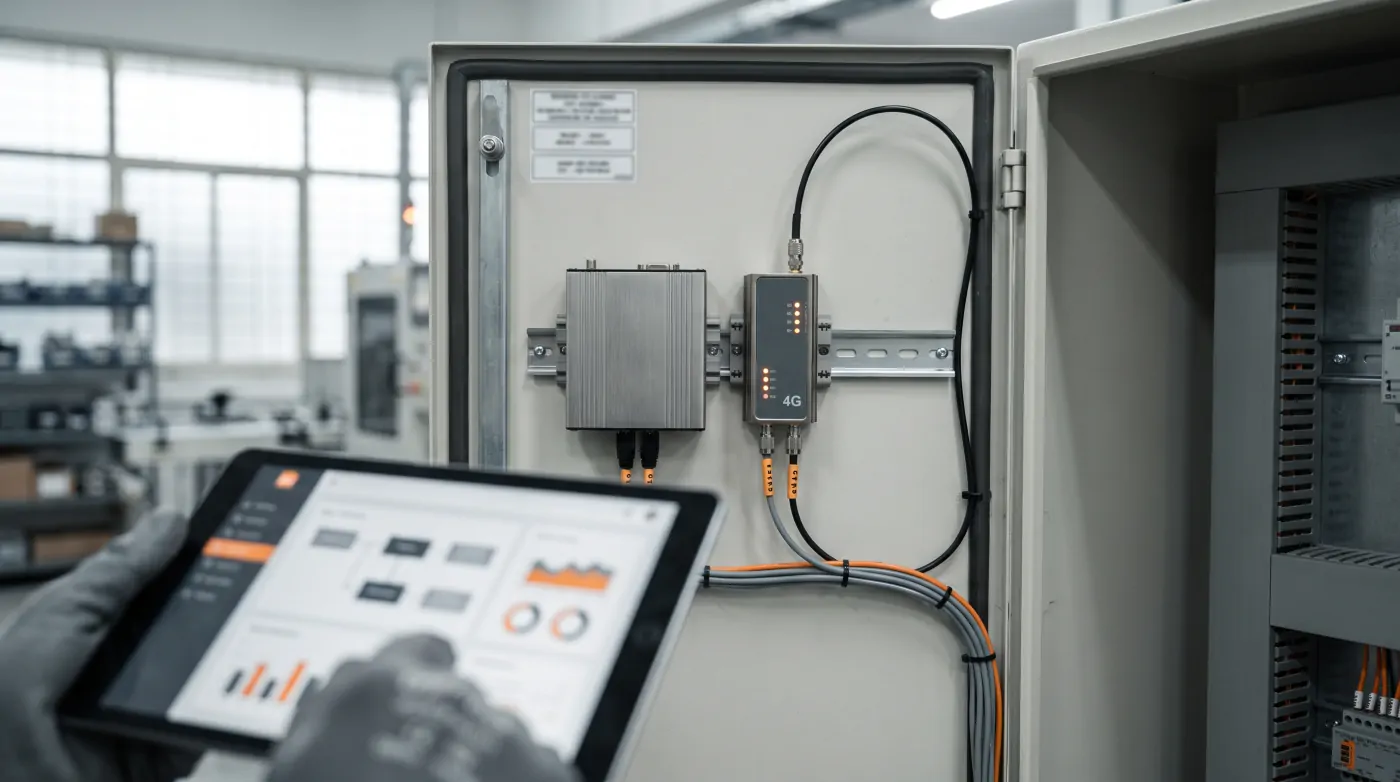
Factories want faster decisions, lower response times, and better visibility across utilities, machines, and production lines. Industrial IoT supports that by connecting plant data to dashboards, alerts, and reports beyond the local operator panel.
Remote monitoring does not mean handing control away from the machine. It means delivering the right information to the right person at the right time.
What Data Is Worth Monitoring
The most useful remote monitoring projects begin with operational questions:
- Which machine is down right now?
- Which drive is drawing abnormal current?
- Which line is losing output?
- Which utility is consuming too much energy?
- Which alarm needs maintenance attention?
That usually leads to data points such as:
- Machine running status
- Fault codes
- Production counters
- Energy usage
- Tank and pressure values
- Temperature trends
- Runtime hours
Building Blocks of an IIoT Monitoring Stack
Sensors and Field Devices
These generate the plant signals.
PLCs and Controllers
The controller remains the trusted real-time execution layer. Clean PLC structure is still critical, which is why PLC Programming Basics for Industrial Automation remains relevant even in connected systems.
SCADA or Gateway Layer
This layer organizes the data, creates trends, and pushes alerts. In many plants, IIoT projects succeed faster when built on a strong SCADA System Guide for Modern Industrial Monitoring foundation instead of bypassing it.
Cloud or Remote Dashboard
Selected values are then shared with management, service teams, or remote engineers.
What Good Remote Monitoring Looks Like
Good systems are selective. They do not flood users with every tag from the PLC.
They focus on:
- Critical machine state
- Meaningful alarm notifications
- Performance trends
- Maintenance triggers
- Utility exceptions
This keeps the dashboard useful and reduces alert fatigue.
Security and Reliability Basics
Remote monitoring must be designed carefully. Plants should define:
- Which data is view-only
- Which devices can send commands
- Which networks are segmented
- Which users can access which dashboards
Even a simple architecture decision can determine whether the system is trustworthy or risky.
Final Takeaway
Industrial IoT remote monitoring works best when it extends, rather than replaces, solid automation architecture. The plants that benefit most are the ones that choose useful data, clean controller tags, and practical dashboards tied to real operational decisions.
Related Articles
Explore more technical guides from our automation knowledge base.