

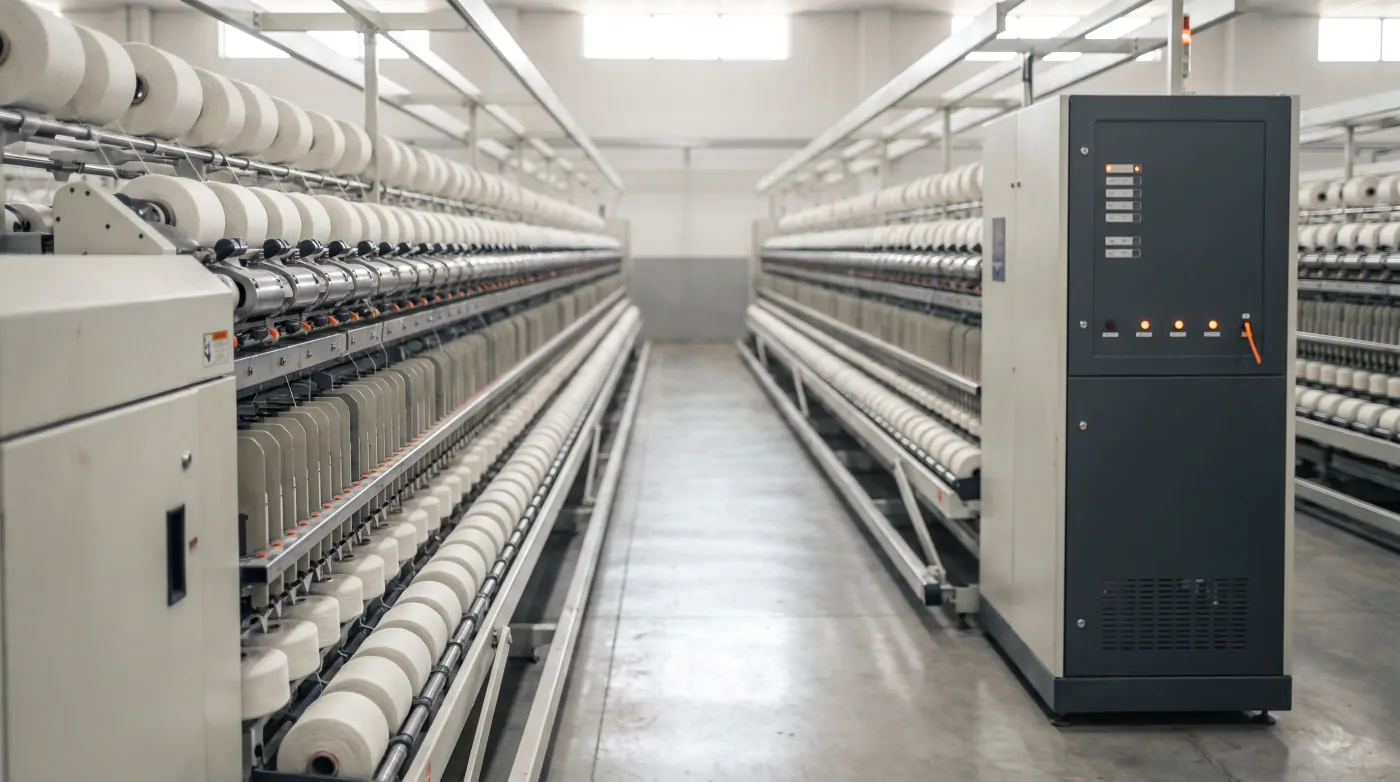
The textile industry has moved far beyond the spinning wheels of the past. In 2026, Industrial Automation is no longer a luxury—it’s the backbone of global competitiveness. By integrating smart technologies, textile mills are transitioning from manual, labor-intensive processes to high-speed, data-driven environments.
Why Automation is Essential for Modern Textile Plants
The global demand for fast fashion and technical textiles requires a level of precision that human hands simply cannot sustain 24/7. Automation addresses the most critical pain points in the industry:
- Precision and Consistency: Automated looms ensure every meter of fabric is identical.
- Labor Optimization: Workers move from repetitive tasks to technical supervision.
- Waste Reduction: Sensors detect yarn breaks instantly.
- Energy Efficiency: Smart motor control reduces power consumption.
Core Technologies Driving the Textile Revolution
1. Advanced PLC Systems
Programmable Logic Controllers (PLCs) act as the brain of textile machines. They control sequences in weaving, spinning, and dyeing operations.
2. VFD (Variable Frequency Drives)
VFDs regulate motor speed and torque, improving efficiency and reducing wear on equipment.
3. SCADA and Industrial IoT Monitoring
SCADA systems combined with Industrial IoT sensors allow factory managers to monitor machines remotely and analyze production performance.
Key Benefits of Automation
| Benefit | Impact |
|---|---|
| Predictive Maintenance | Detect failures early |
| Quality Control | Automated inspection |
| Resource Optimization | Reduced water and chemical usage |
| Faster Production | Shorter production cycles |
The Road to Industry 4.0
Modern textile factories are moving toward Industry 4.0, where machines communicate with each other and production decisions are driven by data.
Conclusion
Industrial automation is transforming textile manufacturing by improving efficiency, reducing downtime, and enabling smart factory operations. Companies that adopt automation early will gain a competitive advantage in the global textile market.
Related Articles
Explore more technical guides from our automation knowledge base.